When you should configure a key
Configure it
From the status page, in the Model configuration card, click Optional: configure your own model.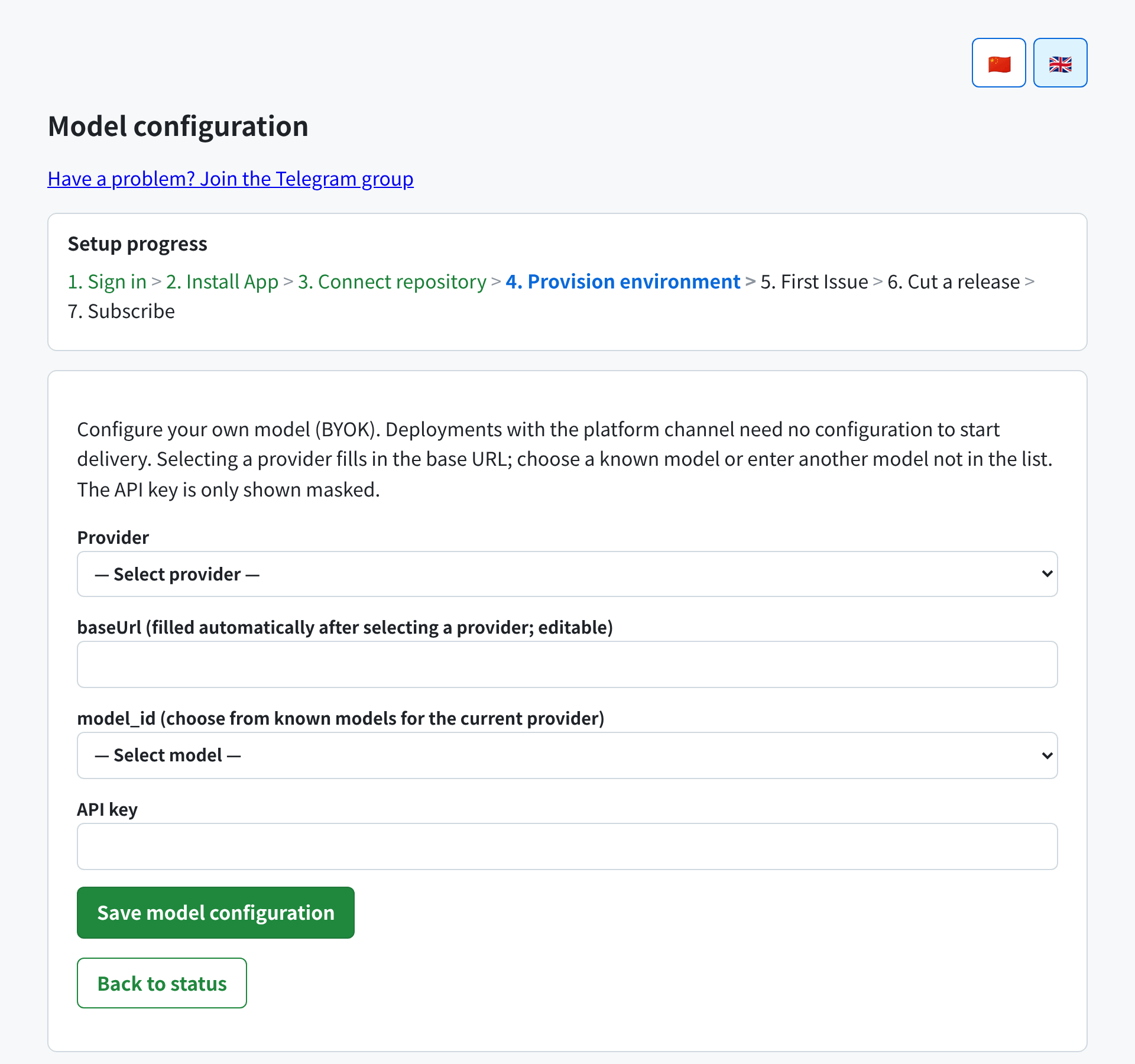
The model configuration page with provider, base URL, model ID and API key fields
- Provider — pick from the list. Selecting one fills in the base URL for you.
- baseUrl — filled automatically, and editable. Change it only if you use a proxy or a private gateway.
- model_id — choose from that provider’s known models, or use Enter another model to type a model ID that is not in the list.
- API key — your key from that provider.
How your key is stored
Your API key is encrypted at rest and is only ever displayed back to you masked — the page shows something like••••1234, never the key itself. It is never written to logs, never included in support evidence bundles, and never shown in any interface that could be shared.
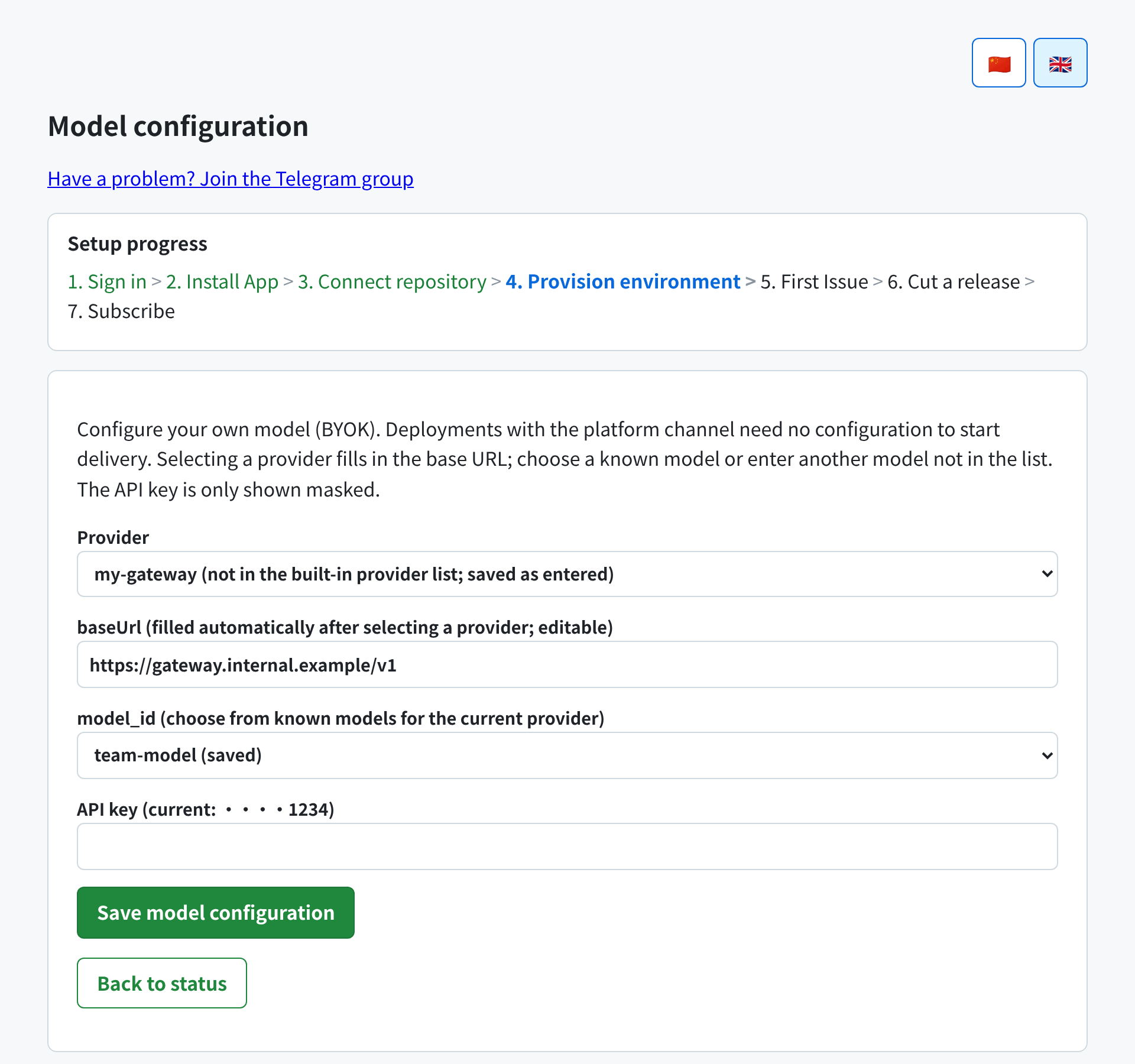
The model configuration page showing a saved configuration with the key masked
Supported providers
Selecting one of these fills in its base URL automatically. Their names appear in the dropdown as shown in the In the dropdown column.
Each provider offers a list of known model IDs in the model_id dropdown. That list is a convenience, not a limit — Enter another model accepts any model ID the provider serves.
A provider being listed is not a promise that your account has quota, access or rate limit for a given model on it. If a model is not available to your key, the delivery fails with the provider’s own error.
Using a provider that is not listed
Choose any provider as a starting point, then edit baseUrl to your gateway’s URL and type the model ID with Enter another model. Any OpenAI-compatible endpoint works. Your configuration is stored as you entered it and shown back to you unchanged.Removing your key
Clearing your configuration returns your tenant to the platform channel and the included quota.What changes when you use BYOK
See limits and quotas for how the quota is counted.